Friday, October 12, 2012

Look Closely


I’m a girl impressed by size; on a recent trip to Western Australia I was exhilarated by hoards of humpback whales, my first snorkel with a 10 metre whale shark is as vivid now as it was 5 years ago.  In the waters around Park Hyatt Maldives Hadahaa we’re always eager to see the big things, swooping stingrays or giant turtles. But as I’ve matured (a bit), I’ve become just as enthusiastic about the less conspicuous creatures on the Hadahaa House Reef. There’s a delicate beauty in everything that should never be overlooked. Patterns formed by the repetitive symmetry of coral polyps are mesmerizing in themselves. Of course it’s a bit easier to get up close if you’re diving, but that’s not to say that snorkelers miss out if you have your eyes peeled. Here are my awards for less spotted reef creatures with cool names (see previous note on maturity): 


ALGAE CATEGORY


Sailors’ Eyeball - Ventricaria ventricosa  
Photo courtesy of reefguide.org
Winner - Sailors’ Eyeball

Not your stereotypical seaweed, the sailor’s eyeball is a shiny green blob with a mystical radiance. Made of only one enormous cell like a water balloon, it’s a little gem that sits amid the coral rubble glinting at passers-by like a crystal ball.


Rusty Scum Algae – Schizothrix calcicola
Photo courtesy of algaebase.org

Runner up – Rusty scum algae

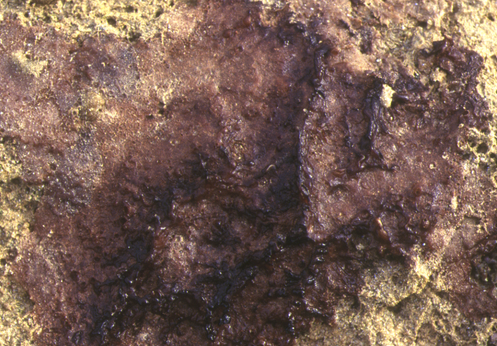
Although extremely common and essentially just slime, it allows you to see photosynthesis in action; I particularly enjoy popping the little bubbles of oxygen that get trapped under the surface of the mat.


WORM CATEGORY

Winner - Christmas Tree Worm

Look closely at boulder corals and you might spot the beauty queens of the worm world.  Only the spiralling feathery radioles can be seen poking out of their holes. Coming in a variety of festive colours, these perfect mini Christmas trees are used by the worm to absorb oxygen and catch titbits. 

Christmas Tree Worm - Spirobranchus giganteus 


Giant Spaghetti Worm - Reterebella sp.
photo courtesy of reef.org

Runner up - Giant Spaghetti Worm

Keep an eye out for their sticky white feeding tentacles that slink along the reef-floor searching for unfortunate little creatures to ensnare and deliver back to their hungry mouth.  


CRUSTACEAN CATEGORY

Winner - Painted Rock Lobster


 If you look under rocks and overhangs you might spot this elaborately coloured, secretive and delicious lobster.   


Painted Rock Lobster - Panulirus versicolor
 Photo taken at Hadahaa courtesy of Stefan Grimmelt


Hidden Sea Whip Shrimp - Pontonides sp.


Runner up - Hidden Sea Whip Shrimp

Easy to find if you have a good memory, this little chap hardly moves from its marital home within the polyps of black coral. 


Leopard Flounder - Bothus patherinus 


FISH CATEGORY


Winner - Flounder


If “Where’s Wally” was a fish… a supreme master of disguise 


Ghost Pipefish - Solenostomus cyanopterus


Runner up - Ghost Pipefish

Is it a fish? Is it a piece of sea grass?
Very hard to tell.  


Monday, September 3, 2012

Romance on Hadahaa's Reef

 Flying into the Maldives on my own is fun for two reasons; to view the intricate web of islands and coral reefs from the air is incredible, but even more entertaining are the sympathetic looks I receive from honeymooning couples. I hear whispers of “Poor girl, obviously been jilted at the altar” - it’s even better if I encourage the rumours with dramatic sniffs. The Maldives is a country where things are made for two; there’s exquisite luxury, absolute privacy and the seductive sound of lapping waves on deserted beaches. It’s therefore a challenge not to fall in love. In this remote part of the world, romance is big business.

Underwater, the fish are similarly one-track-minded and their agenda goes something like this:
  1. Find food
  2. Prevent oneself from becoming food
  3. Mate
By human standards, reef animals have some pretty wild habits. There is a particular penchant for sex-change, multiple partners and erotic mating rituals that can leave one or both parties quite severely injured.

Switching from girl to boy is particularly widespread amongst Parrotfish. Transsexual Parrotfish are easy to spot snorkeling on the house reef as they change not only their sexual capabilities, but also their skin, adorning themselves with a brilliant array of rainbow colours. Although some are born male, others have a go later in life, thus becoming a “super-male”. These “super-males” are the leaders of the pack; older and therefore larger than their original counterparts they can easily dominate and outcompete when it comes to winning the hearts of the ladies. Unfortunately for some, bigger really is better. This phenomenon known as sequential hermaphroditism makes sense; the number of babies a female can parent is limited by the number of eggs she can produce and store, a male on the other hand can father millions given half a chance so having that chance is of the upmost importance.

Sharks are a frequent visitor of this atoll and as you would imagine, they like it rough. Females have had to develop thicker skin to counter the male’s habit of biting their fins or neck during the act. Despite this, they can still look pretty battered and bruised after a round of mating. Thankfully the ladies can store packets of sperm for as long as a year to avoid having to go through this ordeal too regularly.

The prize of the kinkiest behaviour surely belongs to the Persian Carpet Flatworm (Pseudobiceros bedfordi) which we spotted on a dive recently. As simultaneous hermaphrodites they have the reproductive organs of both sexes, so when they meet with a lover they have to decide who will be male and who the female that day. It’s not an easy decision to make. The two worms fight each other for the privilege of being the boy; each is armed with not one, but two razor sharp penises which are brandished like swords. They dual with their penises until one manages to impale the other, injecting the sperm into any part of the body. The sperm then swims around the body of the victim in search of eggs to fertilize, and so the deed is done. Luckily the worms are capable of rapid repair and can patch up any holes within a day. 

At the other end of the spectrum is the Coral Rabbitfish. Much more romantic than the philandering Parrotfish, they find themselves a life partner when they are only 7cm long. Once in a committed relationship they remain inseparable, growing together, quadrupling their size and mating at the same time each year under the light of the full moon. An elongated snout that resembles puckered lips has helped to strengthen their reputation as a fish in love, a favourite with our honeymooning holidaymakers. 
Romantic Rabbitfish

Friday, May 18, 2012

Beach Loving


The Maldives is a country comprising of hundreds of tiny little islands, each of these islands is at least partially, or in our case completely surrounded by a beautiful white sandy beach. The islands are so small and there are so many of them that I would be willing to bet that the Maldives has one of the highest beach-to-land ratios in the world. I am a devout lover of beaches. Pebbly ones, sandy ones, black ones, white ones, big ones and small ones, I love them all. The Scottish town of St Andrews where I studied marine biology for four years has one of the most famous beaches in Britain, mostly thanks to the iconic title scene of chariots of fire. While I was a student, there was a daily attempt to retrace the steps of the Olympic hopefuls running in the movie, but as is fairly obvious from my less than Olympic physique I was never very successful. The tendency was to start off on an invigorating run, which usually turned into an impromptu marine biological study of the exciting things washed up on the high tide line. I am easily distracted in the face of physical excursion.

Every beach tells a story and every beach has the capacity to deliver something exciting, be it a message in a bottle from a shipwrecked pirate, a beautiful shell or a scuttling crab. Best of all, each beach will replenish its bounty twice a day. The Hadahaa beach is no exception and full of treasures, fragments of coral skeletons, shells housing shy hermit crabs and the buoyant seeds from hopeful native plants. If you take a walk along the beach at dusk you'll see hoards of ghost crabs diving for cover as you stroll along, chasing the ghost crabs is on my list of favourite guilty pleasures.

Shells are a favourite for many beach goers, prized for millennia, the Maldives historically made their mark on the international community by providing most of the world’s supply of money cowries, a little shell used as currency all over the world for thousands of years. Collecting beautiful and exotic shells has been popular with the well-travelled for generations, but as with so many natural resources, things have started to get a little out of hand. The demand for shells and shell products has ballooned out of control, so much so that the Maldivian government has had to ban the export of shells or coral. Both big and small, shells can fetch a high price, so understandably, people all over the world, trying to make a living, are venturing onto the reef to forage for shells whilst their creators are still alive, which can be extremely detrimental to the finely balanced ecosystem.

Molluscs are important members of the food chain. Most marine snails feed on algae, like sheep in a meadow; they graze on the plants, helping to control their habit of reproducing exponentially and overgrowing the coral.

The Triton, a huge carnivorous snail, inside a spectacular and especially prized shell, is practically the only predator of the crown of thorns starfish. The bad boy in the starfish world, it has an impressive armoury of poisonous spines, they eat 16 m2 of coral each per year, and have a tendency of breeding rapidly forming herds which sweep over the reef in terrifying coral chomping herds leaving nothing but rubble in their wake. The decline in the number of Tritons has led to Crown of Thorns starfish becoming a serious coral destroying force in much of the Indo-Pacific.

So although collecting shells that have died naturally and can be found washed up on the beach is not directly damaging to the environment, I think its sensible that the government has taken the all or nothing approach to protect the animals that make beautiful shells. My suggestion to our guests is to enjoy their beach finds while they are on the island, take lots of lovely photos, and return their collections to the beach when it's time to go home.
Hadahaa island and our beautiful beach 

Saturday, February 18, 2012

Frolicking with Dolphins


As you would expect from a marine biologist, I’m in and out of the water and a bit damp quite often. Therefore you would have thought that I’ve learned by now not to take my phone with me, sadly this is not the case. Thankfully my most recent phone-drowning hasn’t dampened my mood. The incident was due to an impulsive dive off the end of our jetty, so I could swim amongst a pod of twelve bottlenose dolphins. At that moment my mobile phone didn’t register as being significant compared to an interaction with wild dolphins splashing around in the sunset. If only all the others had been so glamorously sacrificed. 

I know I’m not alone in having an overwhelming adoration for these extraordinary animals. Dolphins are second only to humans in their brain to body ratio, and although intelligence is notoriously hard to determine, it’s obvious that dolphins are up there. Their social behavior is complex and fascinating, as is their communication. They can differentiate, as well as produce, a massive range of sound frequencies, ten times more than humans. One of the most magical things about being underwater with dolphins is that you hear them conversing with one another. Research has shown that each individual has their own signature whistle so they can all recognize who said what in the group. Because sound travels so well through liquids, their chatter penetrates your whole body and you feel completely encapsulated by an orchestral mix of of high-pitched squeaks and clicks. One of our guests likens it to being at the dentist, although I hasten to add that of course, it’s infinitely more enjoyable.

I love to see animals in their natural habitat, but there is no doubt that we have to be careful not to disrupt the natural flow of things, or even worse inadvertently damage the very thing we are trying to catch a glimpse of. The wonderful thing about dolphins is that they appear to actually want to spend time with us. Our Dive-master and true animal lover Rilwan, is very proud of the fact that a dolphin has once tried to kiss him. I unfortunately don’t seem to have quite the same level of appeal, although on every underwater encounter the dolphins have playfully swum closer to get a good look, disappointingly I’ve clearly never made the cut.

Dolphins around the Maldives have conveniently predictable daily routines, which is handy for us. We take trips out to spot them at sunset; at this time of day they’re leaving the safety of the shallow water within the atoll for the open ocean. They tend to rest during the day, and in the evenings they’ll met up with friends forming two hundred strong pods, embarking together on overnight fishing sprees. The most common species here, the spinner dolphin, is particularly fun to watch. They are one of the smallest and the fastest dolphins, having been known to swim at speeds up to an incredible 55km/hr. When in the mood, the spinners can swim at full speed to towards the surface, jumping up and rotating on their tail as many as seven times in one leap. This spectacular acrobatic airshow is not well explained; it could be a form of communication, a method of removing parasites or simply for kicks and giggles. Either way, it looks like a lot of fun, and always results in shrieks of pleasure from all of us on the boat. Every time I take our guests out on a dolphin trip I’m reminded of how lucky we are to live in a remote area so unblemished and abundant in natural wonders.
Frolics with a friendly spinner dolphin 

Tuesday, December 27, 2011

Hyatt thrive


The Maldives is a tiny country with an incredibly small population, yet it’s a bit of a celebrity on the global stage. Certainly everybody I meet when I’m at home in London knows the Maldives. There’s nothing better than someone blandly asking me what I do during a wedding or dinner party. I particularly enjoy watching eyebrows fly up and the look of polite curiosity transform to extreme envy.
Like a siren, the islands captivate travellers with their beauty - the combination of crisp, flawlessly white sandy beaches and blindingly turquoise water. They have the appeal of freshly fallen snow, clearly begging for you to plant your footprints in the sand and splash around in the glossy tranquil waters.
However in recent times, interest in this chain of reefs and islands has been boosted by their vulnerability to climate change. The presidential office has done a good job of highlighting how fragile they are as a nation. The first question I’m asked is usually “are we really sinking?” to which regrettably I have to respond “The consensus amongst the scientific community is that sea levels are rising.” But never one to miss an opportunity to share our beautiful island, I go on to add “so you better come and stay at Park Hyatt Maldives Hadahaa before it’s too late.” 
The intimidating thing about global climate change is the sheer scale of the problem, where to start when we need the cooperation of billions of people. The answer to that conundrum, in our opinion, is education. At Park Hyatt Maldives Hadahaa we make a considerable effort to minimise our impact on the environment. From bottling our own water, preventing the production of 100,000 further plastic bottles a year, to reclaiming heat from the generators to warm the bath water. But how useful is this if the island next door doesn’t have a clue and are busy undoing our good work? A number of local people have never left their little 1km2 island, they’ve never seen a city, let alone a power station or factory. Yet these are the people will be amongst the first to have their homes and heritage engulfed by rising seas and the other negative impacts of climate change.
Our relationship with the local people has to be very strong, more than 55% of our employees are Maldivian, and a large proportion of those come from the nearby islands. The remote location of Hadahaa rewards us with an exceptional stillness and peace, but it also presents inevitable logistical challenges which require sustainable resources. The more supplies and staff we can source from local islands the better. It’s with this philosophy that we have started to develop a symbiotic relationship with our neighbouring islands. This month we have launched an incredibly exciting community development initiative by the name of ‘Hyatt Thrive’. 
Although a large number of the employees on Hadahaa are from nearby islands, we all live together on the resort. The initial aim of Hyatt thrive was to allow us to continue to contribute to the communities while we are all living away from home. We’ve taken inspiration from the UN and formed a committee of elected ‘Ambassadors’ to represent the different islands. Our ambassadors understand the status of their islands with regards to sustainability and employment issues and are fully aware of the capabilities of the Park Hyatt Maldives Hadahaa team which is a powerful tool for the establishment of a worthwhile educational program such as this. The focus of ‘Hyatt Thrive’ is based around long-term sustainability education, the development of new business skills and other personal development projects that will improve the lives and livelihoods of the local people.
Through better connectivity, shared knowledge and encouragement from all sides, we will create a new situation in which everyone benefits. We can inspire sustainability and environmental responsibility, gather supplies and recruits from nearby islands, while the local communities develop and prosper.  It’s a project we are extremely proud to launch. The level of enthusiasm and support we have received from all in involved is terrific. I’ve come to realise that most people want to help. By breaking the problem down into manageable bite sized chunks, and giving everyone a means to act on their concerns, I am confident that together we can achieve great things.  
Executive Chef Elchin chatting with some local children

Sunday, December 4, 2011

The Whiff of Danger


I think it’s true to say that most of us are fascinated by mildly dangerous situations. Testament to this could be the popularity of rollercoasters, in the grand scheme of things, they are pointless contraptions, but nonetheless, you can’t help but enjoy them. Scuba diving is even better than rollercoasters; it’s got the thrill of potential peril, weightlessness and equipment akin to space travel, and best of all lets you into a world full of fascinating creatures and adventures.  It starts to become addictive, imagining what we’ll see today, each dive is filled with anticipation.

For me, the most alluring animals are those that can pull off being exceptionally beautiful, safe in the knowledge that they are extremely poisonous. The Lion Fish is a well-known favorite, adding a twinge of excitement to any underwater escapade. Adorned with fire-striped fins dangling off their bodies in long ribbons, they look more like Christmas decorations than deadly predators. They can usually be found chilling under ledges, twitching their fins provocatively, each fin a hollow tube capable of delivering potent venom. Their wing-like fins can be draped around little fishy snacks, before being sucked into a hungry mouth, or raised as a warning when their personal space is encroached. Luckily the effectiveness of their weaponry allows them to be rather lazy, their embellished features prevents them from swimming very fast, and they certainly wouldn’t waste energy chasing us. All good news, as it means we are able to have a closer look at them in all their glory without the imminent danger of being attacked.

Sharks of course, are also always a pleasure to encounter underwater. The first few sightings never fail to send a dose of adrenaline coursing through the veins. They exude confidence as they elegantly glide above the coral cutting through the water with purpose and grace. Thankfully our location, inside the protection of the atoll’s edge, means the reef is only suitable for the small, unthreatening reef species. But what we lack in size we make up for with numbers. There are plenty of sharks in this area, The Maldives was the first county in the world to put a complete ban on shark fishing, and Park Hyatt Maldives Hadahaa is in such a remote area that the local shark population is booming. Our house reef is teaming with both black and white-tip reef sharks, it’s not uncommon to see three or four on a leisurely snorkeling trip, even the land-lovers catch glimpses of them from the jetties or water villas. I saw more sharks in one snorkel on our house reef than I did in the entire year I lived in the north of the country. In fact, after a few encounters with our plentiful and friendly reef sharks, their reputation for teeth and a bad temper is long forgotten. When I saw one having a little nap on the seabed this afternoon, it reminded me more of a Labrador puppy than the ferocious beasts you see on film.

Exciting though they are, dangerous marine organisms should always be approached with the respect they deserve. Even inanimate coral, which has no means to advance or attack can be responsible for their fair share of injuries. The thick and bushy coral garden surrounding Hadahaa forms a complete and impenetrable barrier between the blue and beach. The intricate network of skeletons means that the coral is very sharp. Taking care not to touch anything in the water and approaching deadly creatures with caution ensures that we can all enjoy our underwater rollercoaster rides without meeting with a sticky end. 
A beautifully deadly Lionfish (Pterois volitans)